Opinion piece: There Is No Such Thing as a Neutral Spirituality
We live in a time where many voices speak about healing, mindfulness, and inner transformation. And I genuinely believe that inner work matters. It shapes how we show up. It heals wounds. It softens hearts. It can change lives. And yet, I wonder:
Can a spirituality that focuses solely on personal growth remain whole in a world marked by violence and injustice?
Does inner transformation eventually ask something of us outwardly?
At what point does “staying in one’s lane” become a way of staying comfortable?
There Is No Serious Spirituality Without Solidarity
Spirituality that ends at personal wellbeing is not neutral; it is incomplete. And when it is paired with influence, scale, and profit, that incompleteness becomes a moral failure.
Inner work may soothe, regulate, inspire, or optimize an individual life. But on its own, it does not yet touch the moral fabric of the world. The moment spirituality becomes a public voice, especially at massive scale, the question is no longer only about personal transformation. It becomes a question of responsibility.
There is a popular idea circulating today that spiritual influencers should “stay in their lane.” That transforming individuals is enough. That inner work alone will somehow, eventually, ripple outward into justice.
This idea sounds appealing. It feels safe. It avoids conflict. It preserves brand neutrality.
But history does not support it.
There has never been a serious spiritual tradition, nor a revered spiritual leader, that treated inner transformation as a substitute for moral responsibility. Every tradition we now recognize as spiritually mature emerged in direct confrontation with suffering, oppression, and moral collapse. Across cultures and religions, spirituality has always bent toward solidarity.
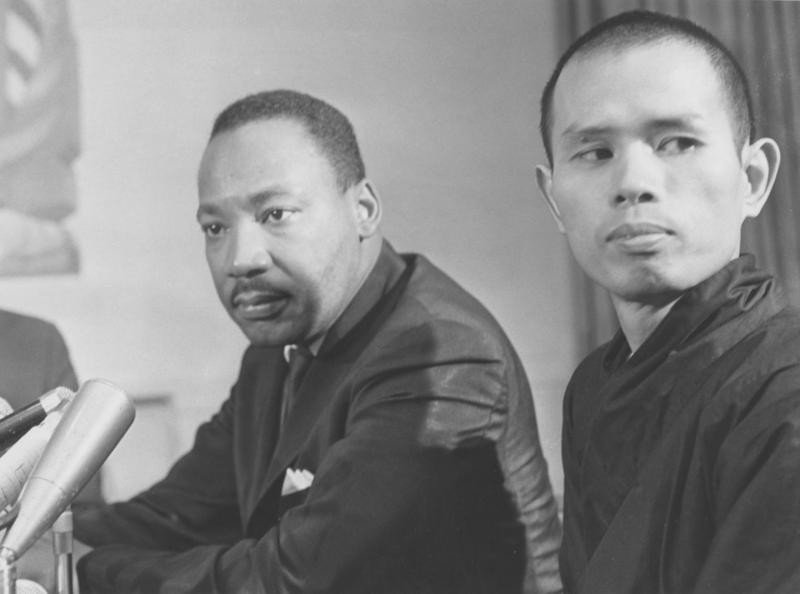
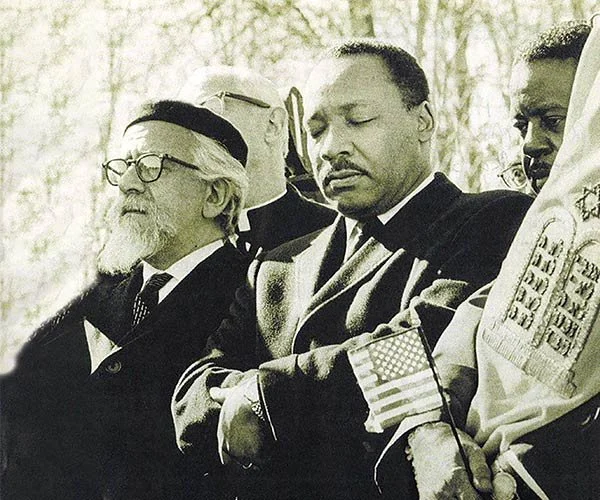
Martin Luther King Jr. did not preach inner peace as a substitute for dismantling racism.
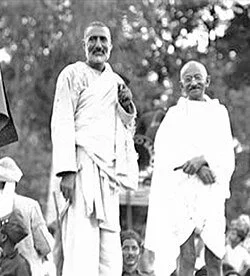
Mahatma Gandhi did not meditate his way around colonial violence.
Thich Nhat Hanh articulated engaged Buddhism because meditation that ignores bombs falling on villages is spiritually incoherent.
Rabbi Abraham Heschel marched because prayer that does not walk into history becomes empty language.
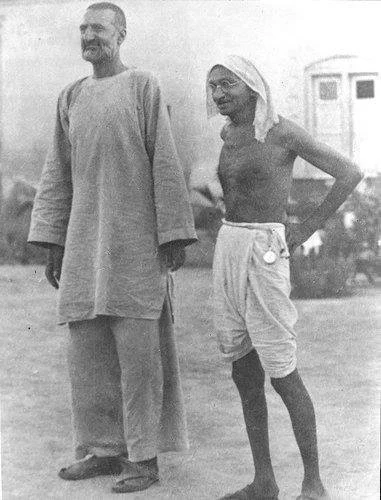
From the Muslim tradition, Abdul Ghaffar Khan, known as the Frontier Gandhi, organized one of the largest nonviolent movements in history, grounding courage and resistance explicitly in Islamic spirituality.
Even the Dalai Lama, often portrayed as purely contemplative, speaks clearly about occupation, violence, and ethical responsibility.
None of them said, “This isn’t my lane.”
None of them outsourced justice to someone else.
What made their spirituality credible was precisely that it cost them something.
Influence Creates Moral Responsibility
This is where the conversation about today’s spiritual influencers becomes uncomfortable.
We are living through a time of visible injustice, violence, and collective suffering. In such moments, silence from those who claim spiritual authority is not an absence of opinion; it is a position, especially when that silence comes from people with platforms that shape how millions think, feel, and orient themselves to the world.
Not speaking does not automatically mean not caring. And speaking does not automatically mean someone is wise. No one is obligated to comment on everything.
But when someone holds influence at scale, silence is no longer personal. Influence is power. And power always participates in shaping reality, either by naming harm or by normalizing it through absence.
This is why the argument “they’re transforming enough people already” does not hold. Personal healing that does not expand into solidarity produces emotionally regulated individuals living inside unjust systems they no longer question. That does not transform the world.
Claiming spiritual authority while refusing moral visibility is a contradiction.
When spirituality trains people to breathe, manifest, align, and self-optimize, while remaining silent about violence, oppression, and dehumanization, it has been domesticated. Shaped to fit comfort, safety, and marketability, it becomes self-help dressed in sacred language.
When spirituality becomes a brand, neutrality becomes profitable.
When platforms grow large, silence protects access.
When injustice is controversial, “staying in your lane” keeps audiences intact.
But spirituality that avoids moral risk is not wisdom; it is risk management.
Love Is Never Private
There is a deeper distortion underneath this debate.
We have confused inner work with withdrawal.
We have mistaken nonviolence for non-intervention.
We have reframed humility as silence in the face of injustice.
But spirituality, at its core, is about love. And love is never private.
Love moves toward suffering.
Love speaks when silence protects harm.
Love risks misunderstanding to remain faithful to truth.
So yes, those with platforms do have a responsibility. Not to perform outrage. Not to posture. Not to comment on everything. But to refuse the lie that spirituality can be separated from the conditions people are forced to live under.
There is no genuine inner work that does not eventually ask something of us in public.
If spirituality does not make us more awake to injustice, more capable of grief, more willing to stand with the vulnerable, then it is not awakening us. It is insulating us.
And that is not neutrality.
That is a choice.
“When bombs begin to fall on people, you cannot stay in the meditation hall.”