The sanctification of time (Part 1): The Eight Prayer Watches
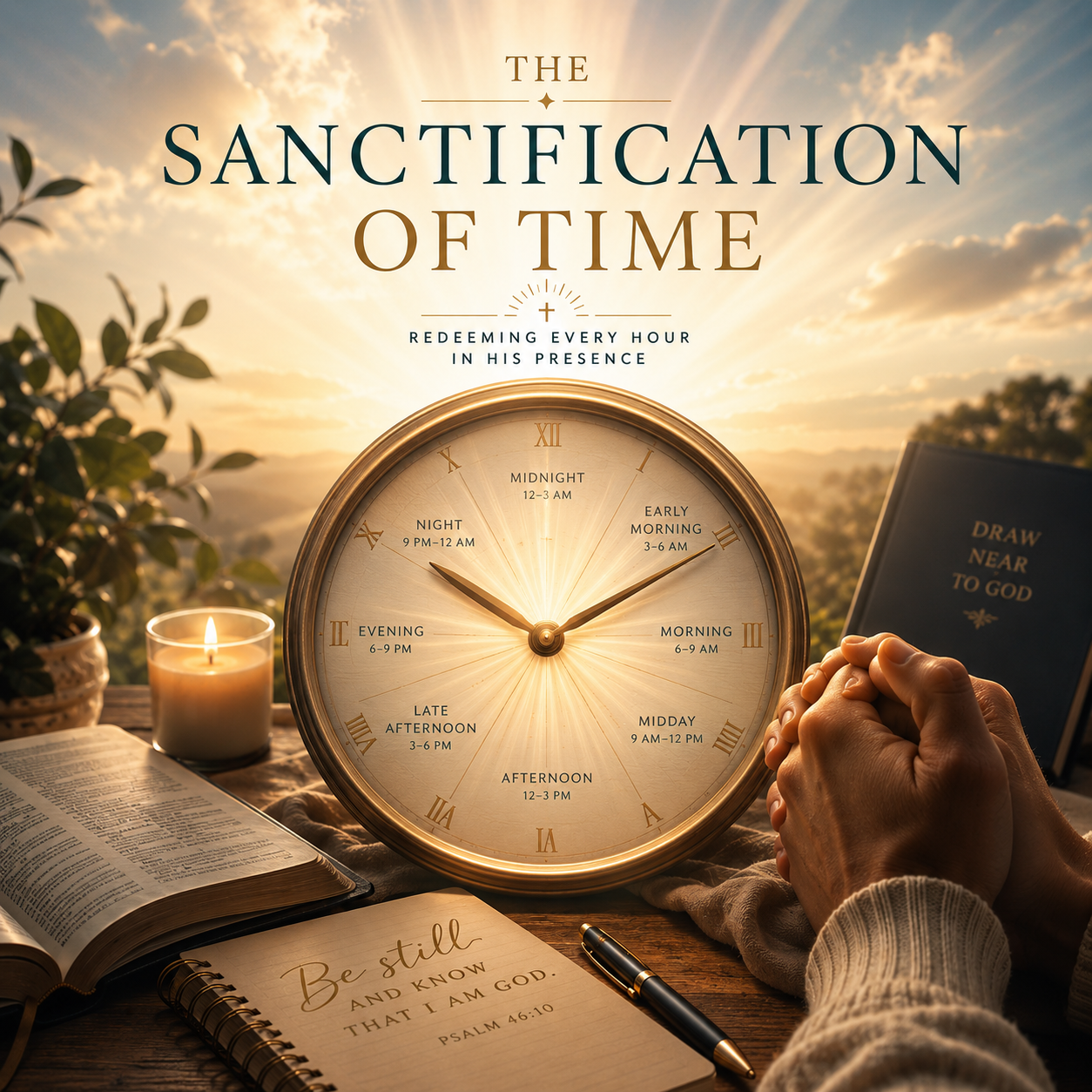
Every hour belongs to God. Some hours help us remember.
“Pray without ceasing.” - 1 Thessalonians 5:17
Time is not neutral. Every hour of the day already stands in the presence of God, and the human heart can be trained, through regular and rhythmic return, to know this. This is what the Christian tradition means by the sanctification of time: not setting certain hours apart from ordinary life, but learning to see all of time as sacred ground.
This conviction runs through the entire history of Christian prayer.
The early Christians inherited fixed hours of prayer from Judaism, where morning, afternoon, and evening prayer structured the day of any devout Israelite.
The Desert Fathers of the third century organized their communities so that prayer flowed unbroken across every hour.
St. Benedict formalized this into seven daily hours of prayer in the sixth century, directly echoing the psalmist: "Seven times a day I praise you" (Psalm 119:164). These became the canonical hours that have shaped Christian devotion for more than a millennium.
The underlying conviction has never changed: a day that returns to God at regular intervals forms a different kind of person than one that does not. Attention deepens. The sense of being accompanied by God becomes the steady ground of ordinary life rather than the rare exception.
“At midnight I rise to give you thanks...Seven times a day I praise you for your righteous ordinances.”
The biblical foundation of the Watches
The Bible divides the night into periods called watches, defined blocks of time during which guards kept vigil.
The Old Testament knows three night watches.
By the New Testament period, the Roman system had extended this to four.
Scripture makes this language theological: the watchman becomes an image of the person of faith who remains alert and turned toward God.
Jesus uses this imagery directly:
"Watch therefore, for you do not know when the master of the house is coming — in the evening, at midnight, at the crowing of the rooster, or in the morning." — Mark 13:35
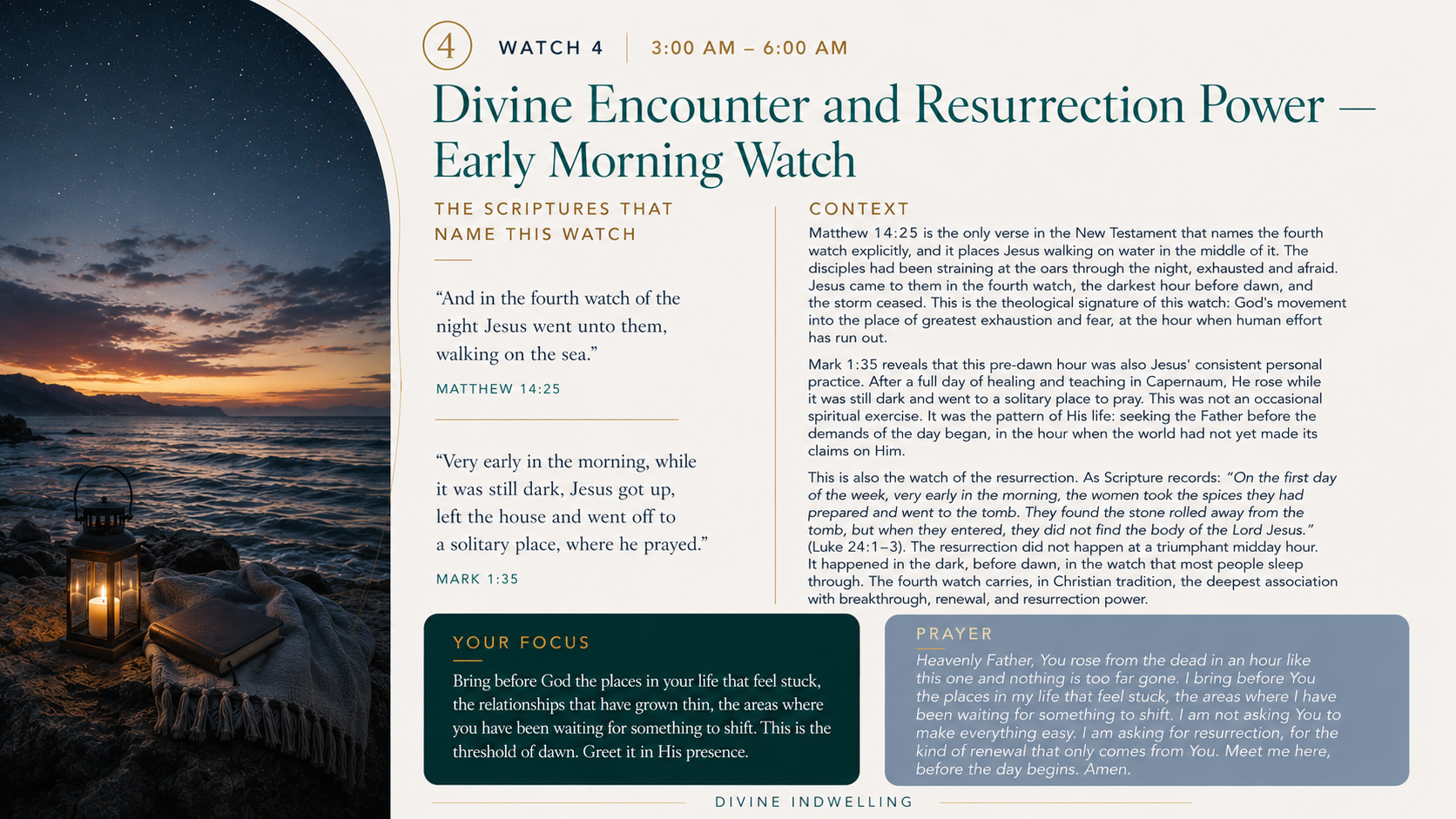
"And in the fourth watch of the night, Jesus went unto them, walking on the sea." — Matthew 14:25
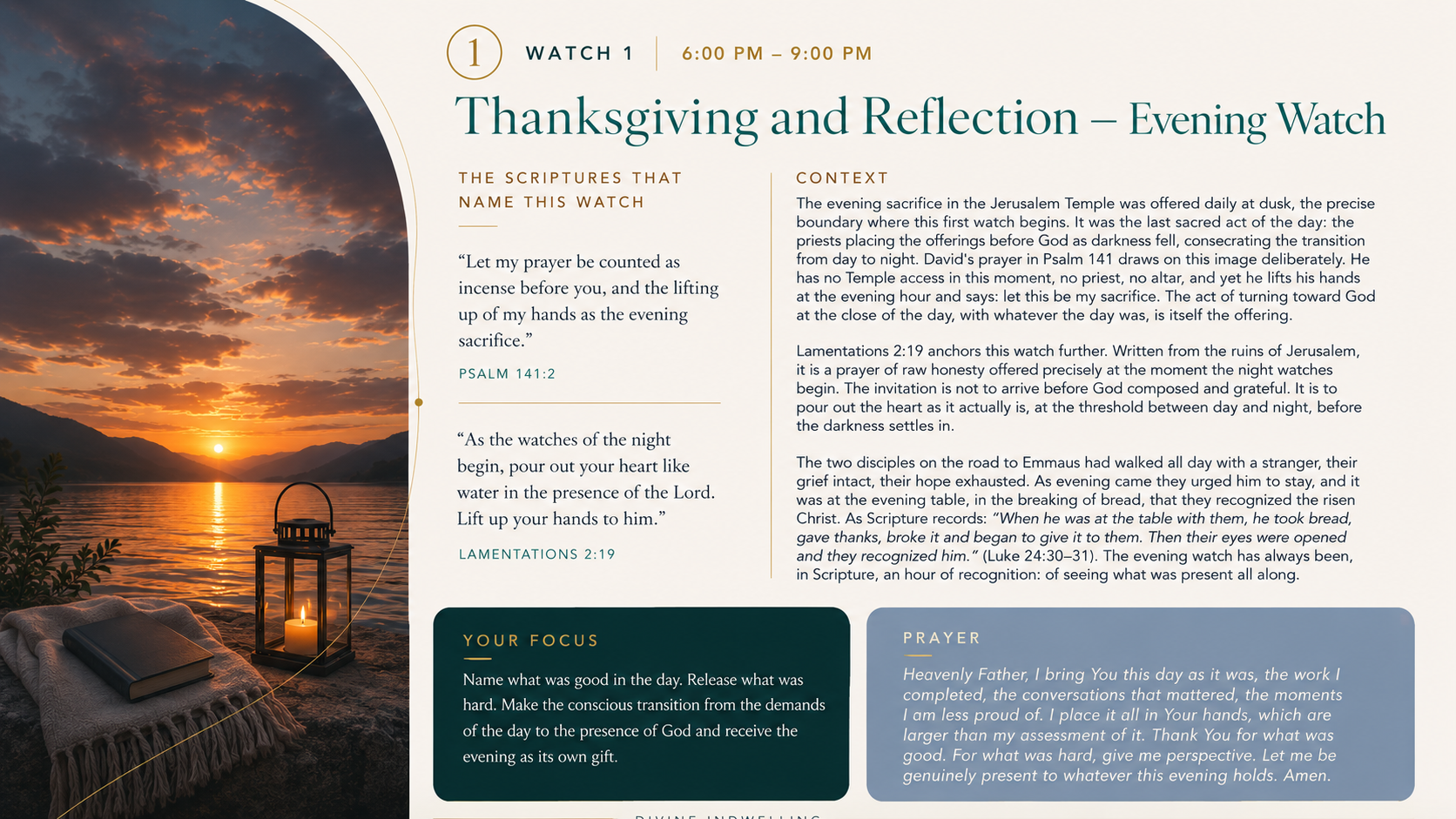
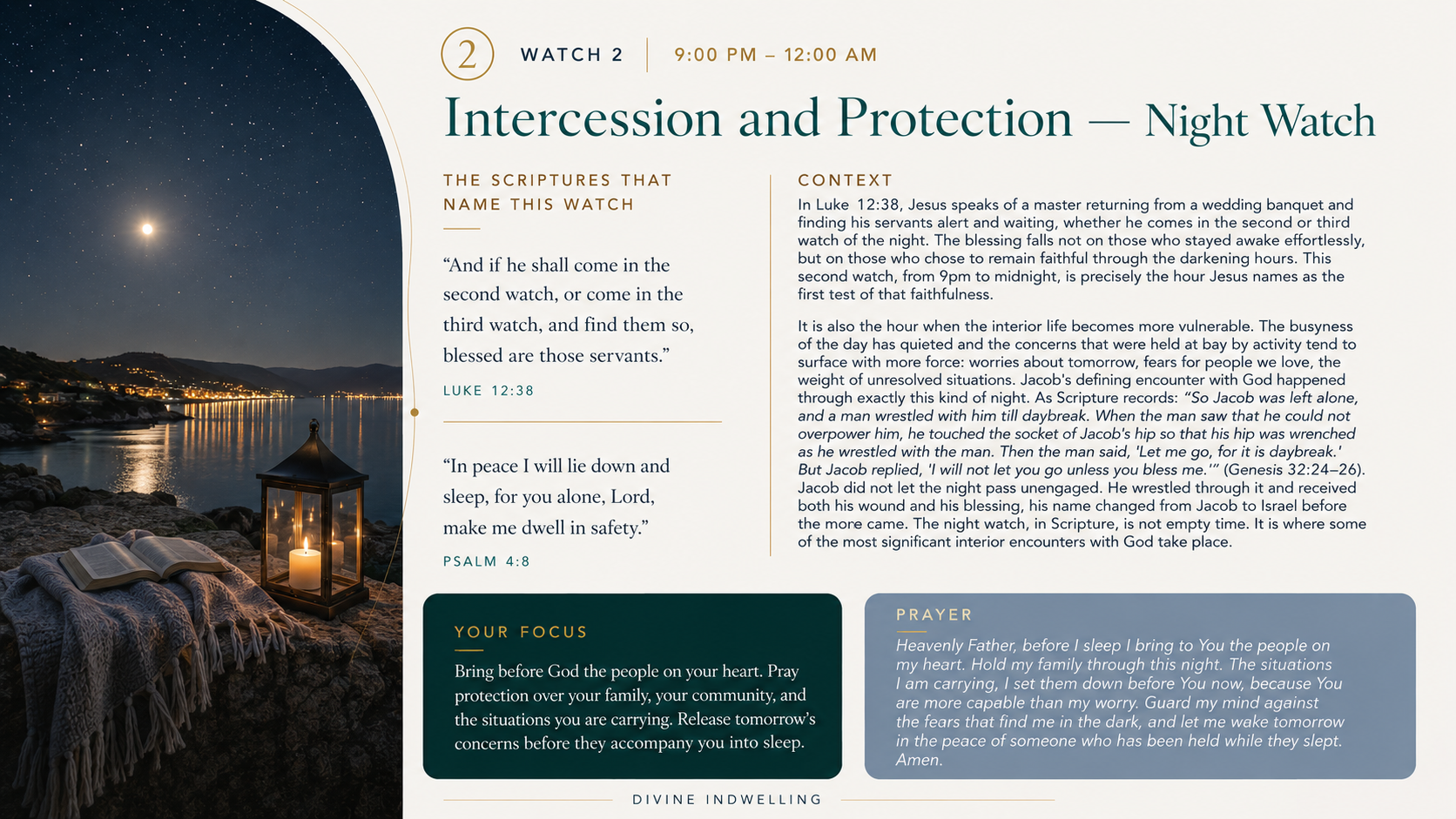
"And if he shall come in the second watch, or come in the third watch, and find them so, blessed are those servants." — Luke 12:38
The Psalms bring this same language into prayer:
"As the watches of the night begin, pour out your heart like water in the presence of the Lord." — Lamentations 2:19
"On my bed I remember you; I think of you through the watches of the night." — Psalm 63:6
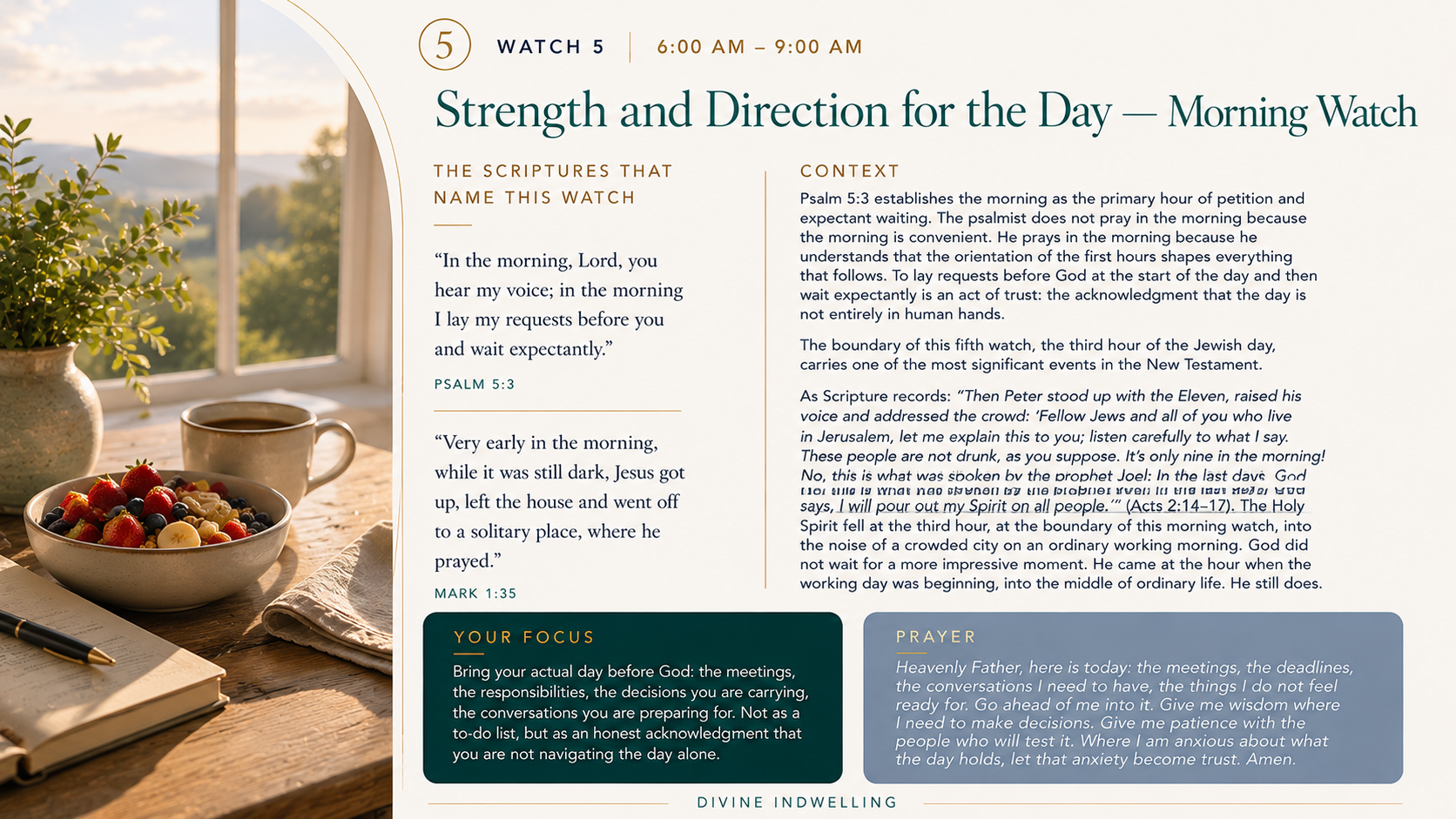
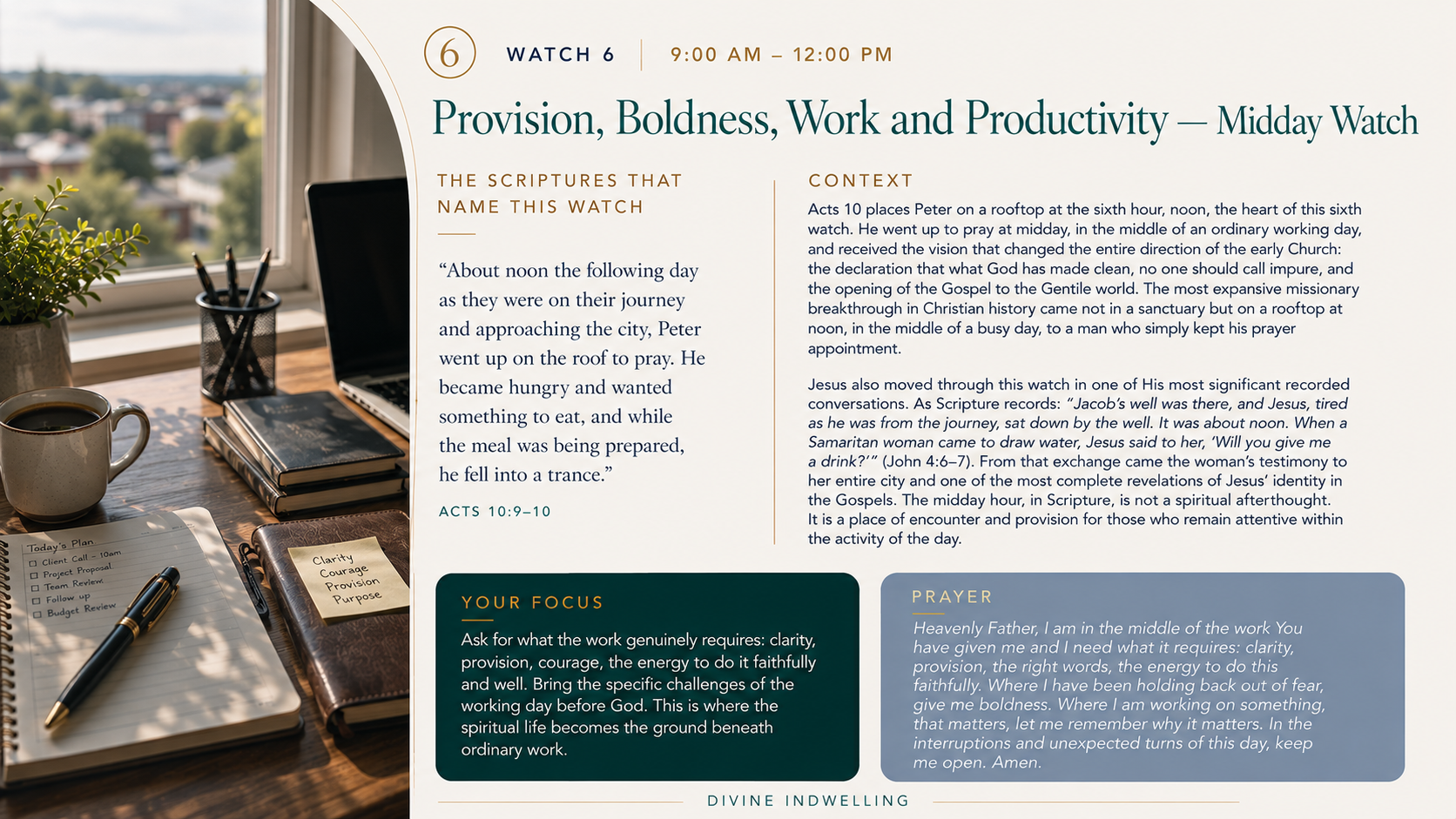
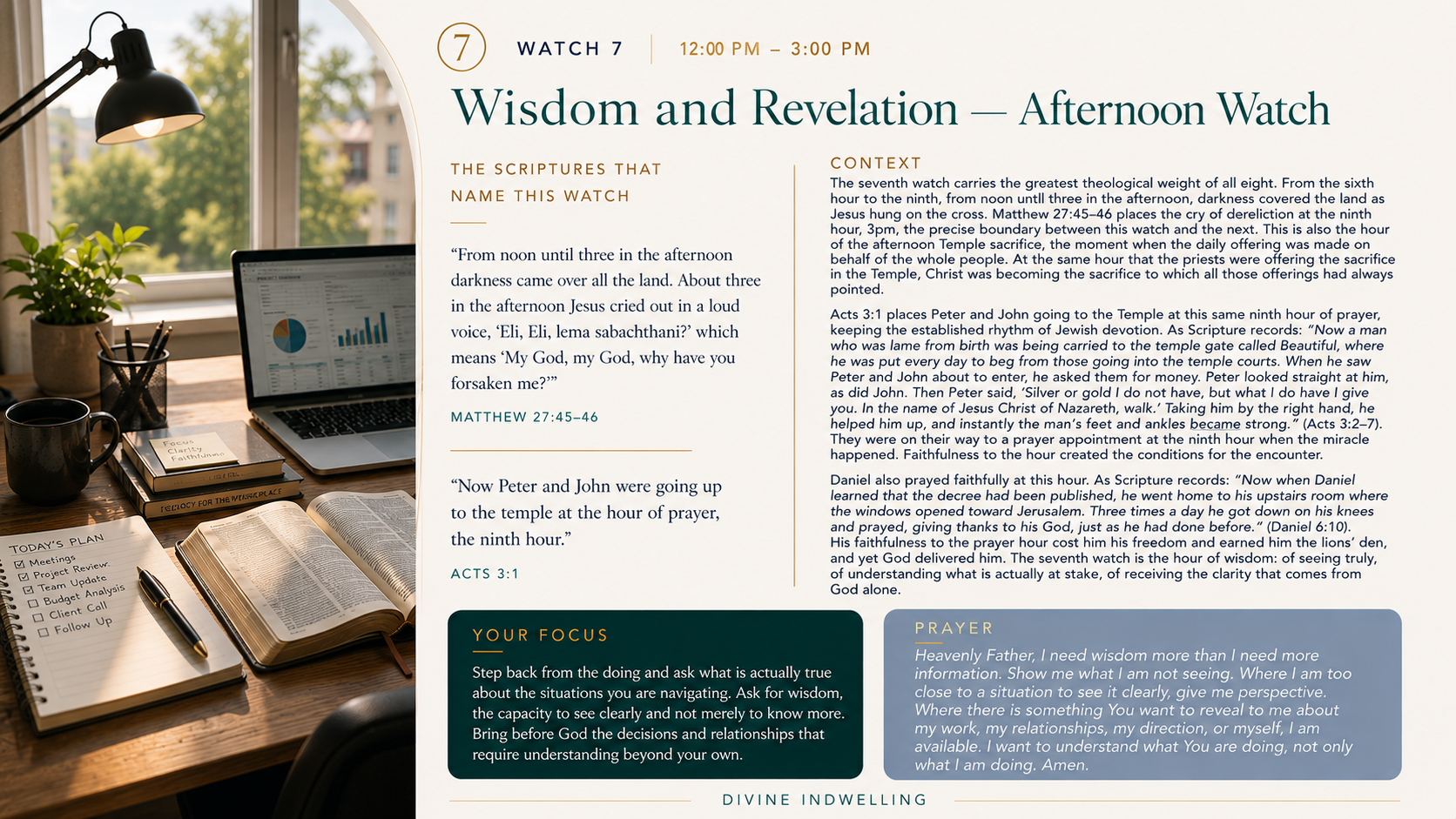
Beyond the night watches, Scripture also marks fixed hours of prayer throughout the day — the third hour (9am), the sixth hour (noon), and the ninth hour (3pm) — which Acts names as regular times of prayer and encounter in the early Church (Acts 2:15; 10:9; 3:1).
“Watch and pray so that you will not fall into temptation. The spirit is willing, but the flesh is weak.”
The eight Prayer Watches
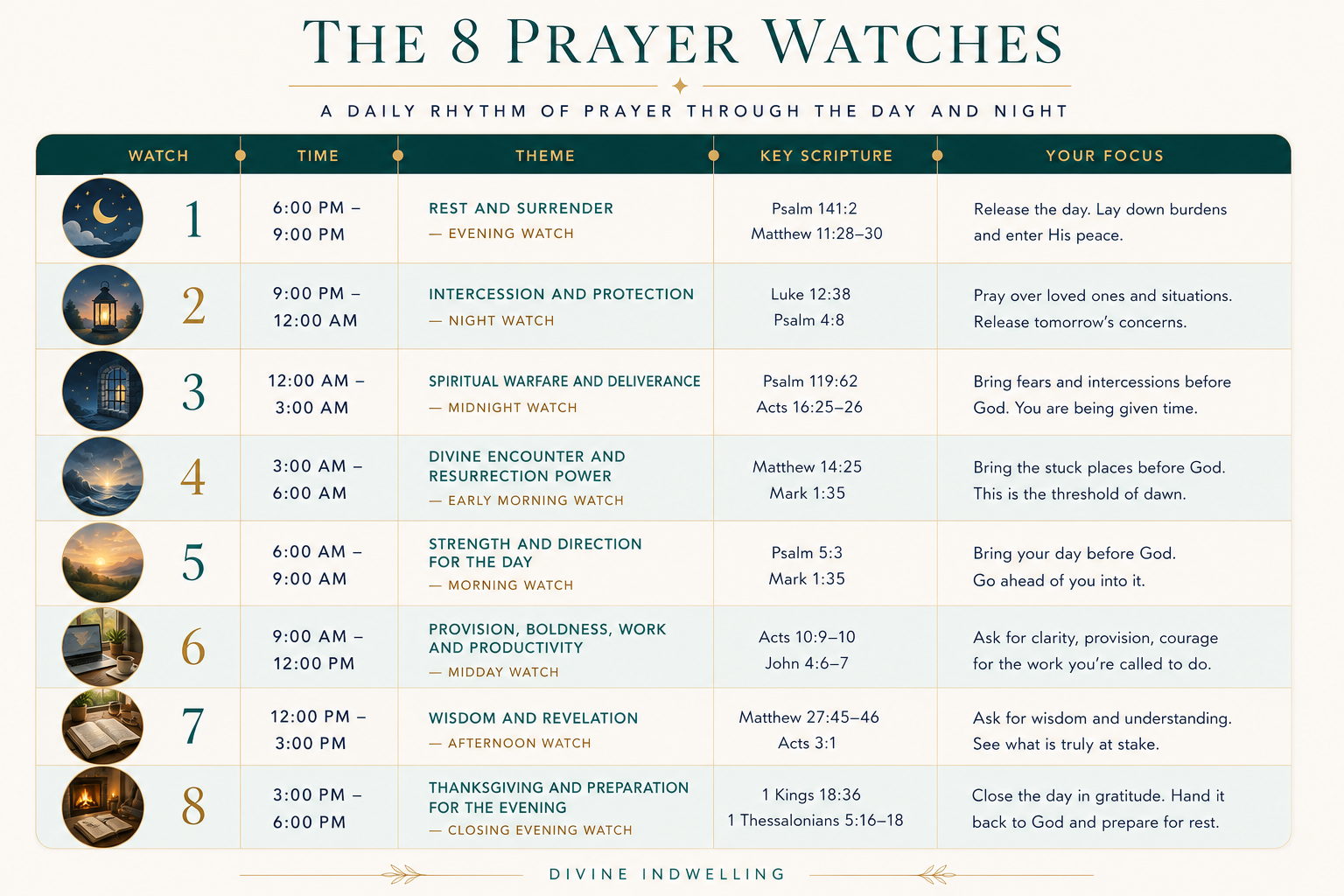
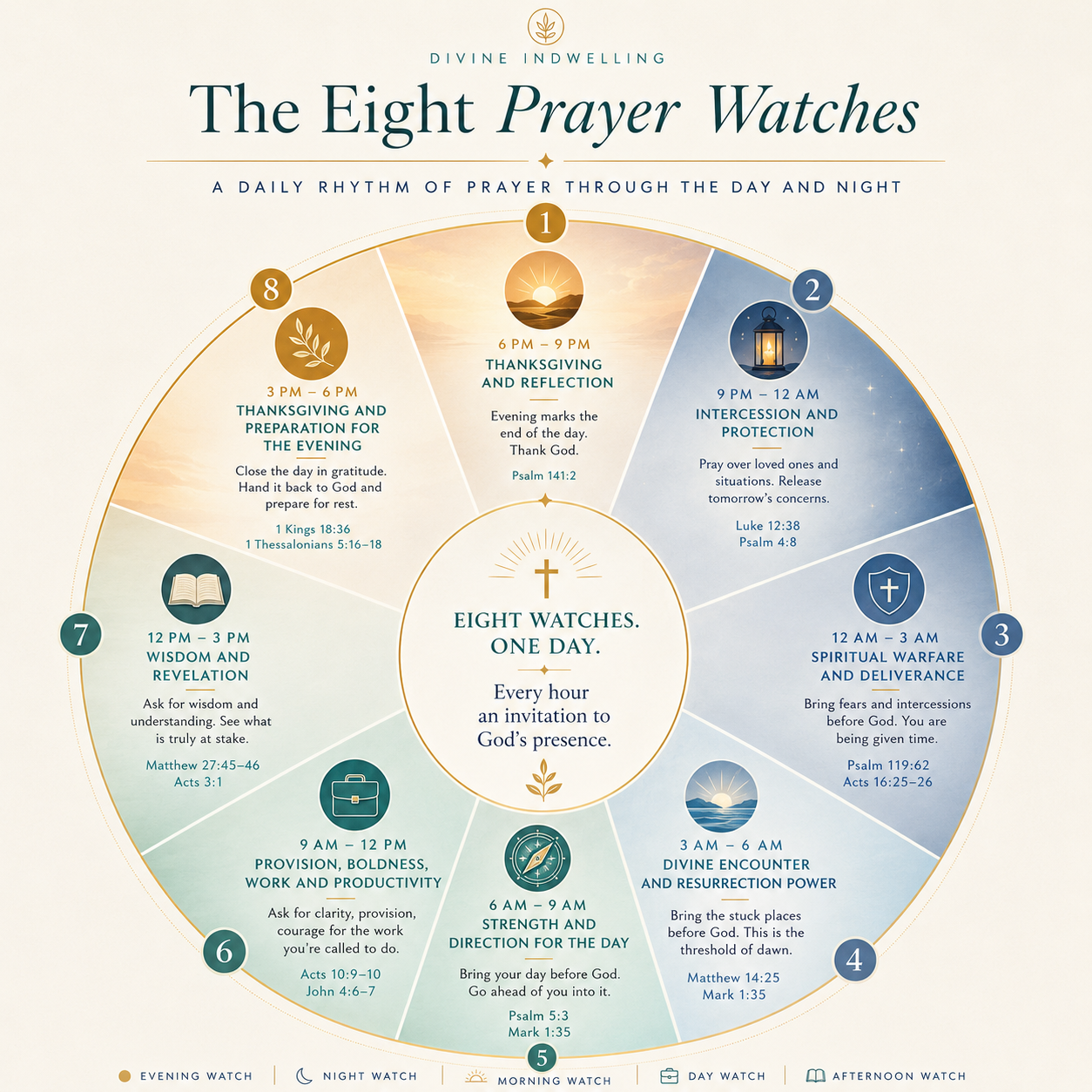
The Eight Prayer Watches combine the four biblical night watches with the four daytime hours of prayer into a complete twenty-four hour cycle.
The day begins at 6pm, following the ancient Hebrew understanding, the pattern of Genesis itself, where each day is described as "evening and morning."
A note on origins: The eight-watch framework is a contemporary devotional practice, associated with charismatic and evangelical intercessory prayer movements. It is not part of the historic liturgical systems of the Catholic Church, Eastern Orthodoxy, or classical Protestant traditions. It functions as a devotional tool, not a formally transmitted tradition — though the theological principle it embodies is one of the oldest in Christian history.
The watches become valuable when they deepen attentiveness and anchor prayer into daily life. They become counterproductive when missing one becomes a source of guilt. They are a structure in service of a relationship, not a performance with a score.
“And if he shall come in the second watch, or come in the third watch, and find them so, blessed are those servants.”
The devotional tool: eight watches through the day
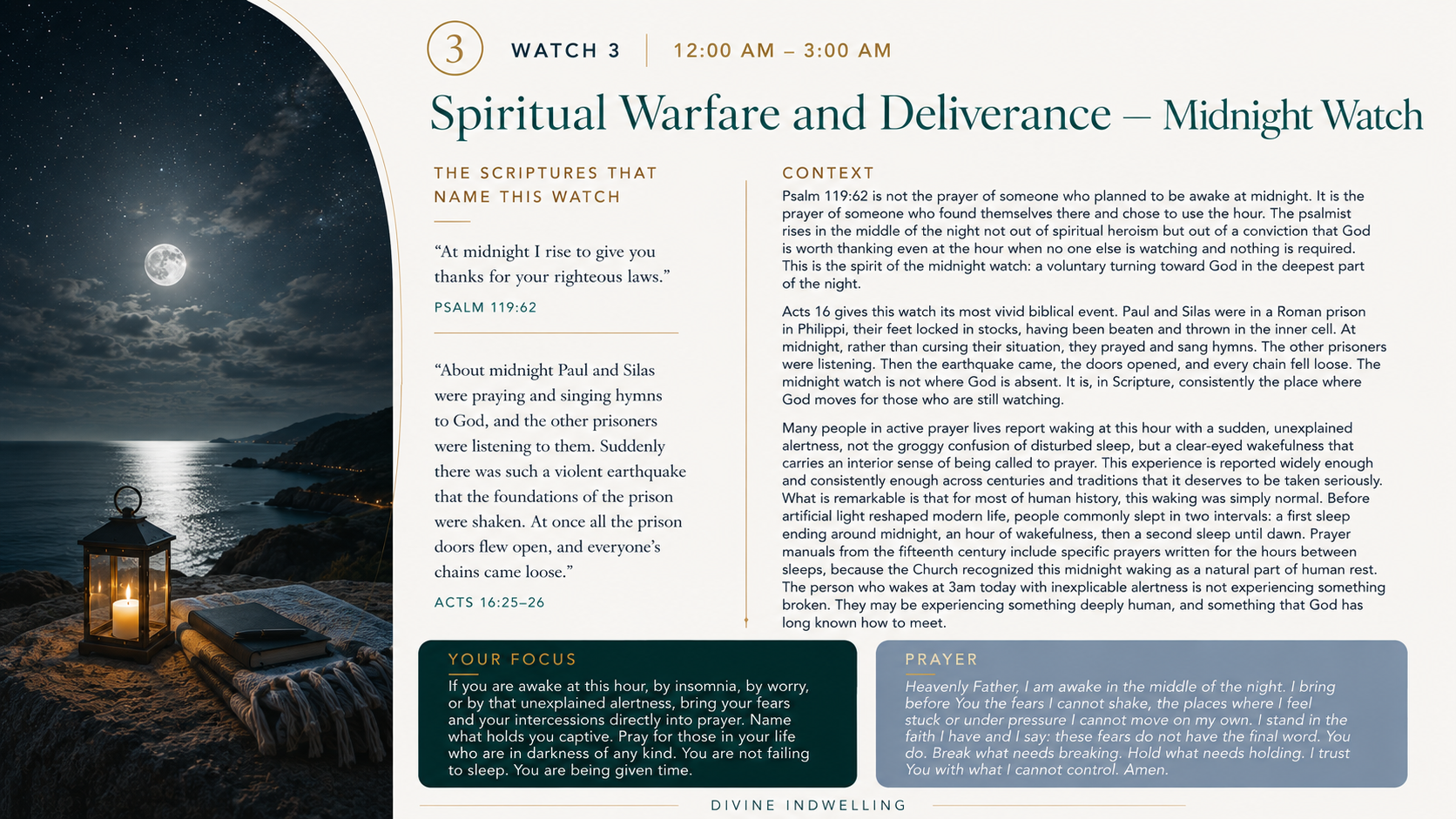
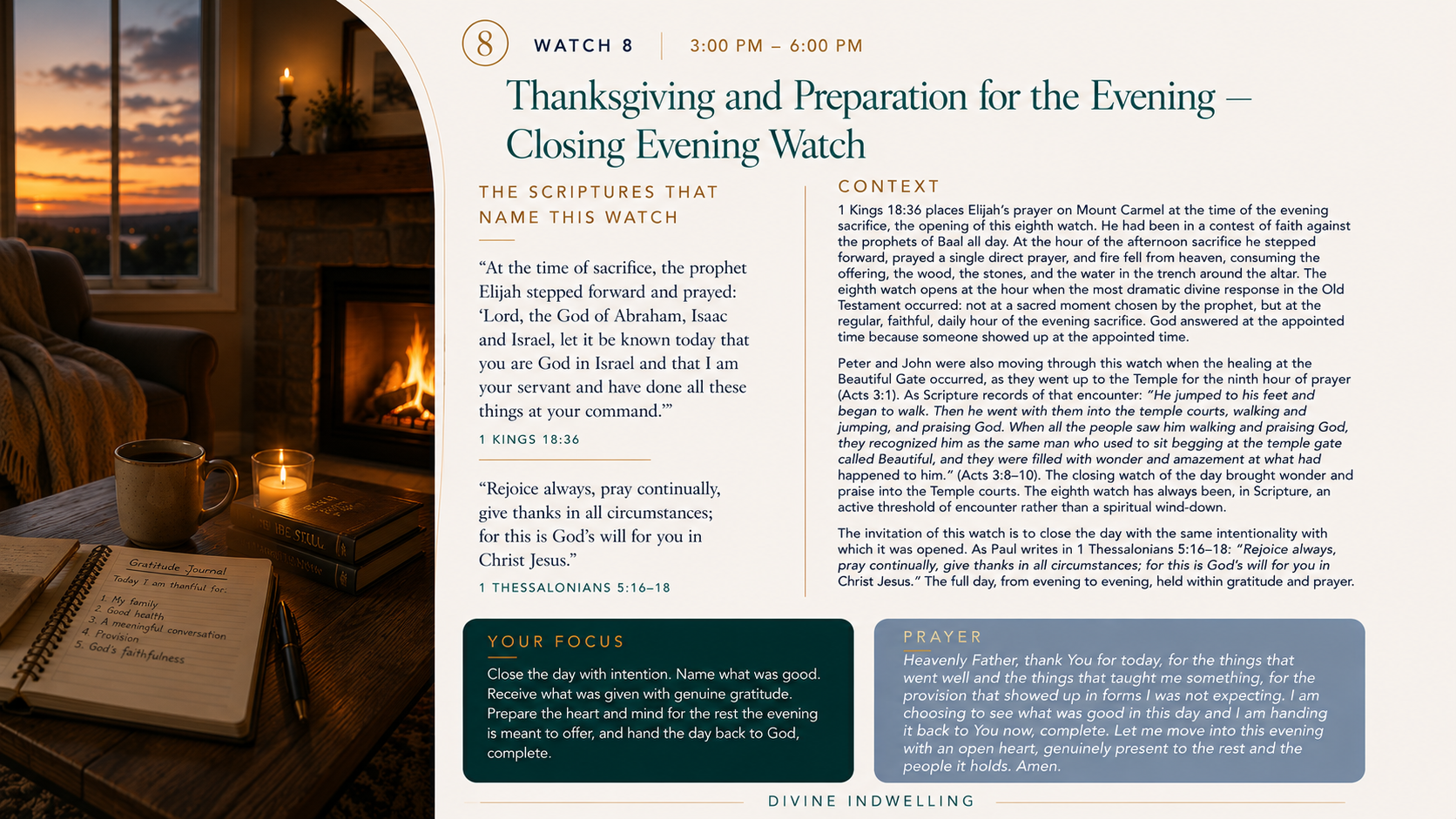
Each watch carries a theme drawn from Scripture and from the rhythm of Christ's own life. Below is each watch with its biblical grounding, its focus, and a prayer to use at that hour. You do not need to keep all eight. Begin with one, the one that corresponds to an hour you already have, or an hour that finds you awake when you did not expect to be.
How to use this in your prayer life
Start with one watch. Choose the one that corresponds to an hour you already have, the morning before the day begins, the evening when the day ends, or the night hour that finds you awake. One watch kept faithfully is more formative than eight kept aspirationally.
Set a simple reminder. A phone alarm or a calendar notification at the start of each watch you want to keep. When it sounds, you know what it is for.
Use the prayer as written, or let it lead you into your own. The prayers above are starting points. Some days you will read the words. Other days they will open into something more personal. Both are the practice.
For insomnia and sleepless nights. The second, third, and fourth watches are already available to you. The hour that feels like lost rest becomes a different kind of time when you bring it to God rather than fighting it. The psalmist who wrote "I think of you through the watches of the night" (Psalm 63:6) was writing from exactly this experience.
For travel, waiting rooms, and long journeys. Enforced stillness is rare in modern life. When it arrives, a long flight, a waiting room, a solitary evening in an unfamiliar city, it can be received as an unexpected gift of time. Any watch whose hours overlap with where you are becomes available.
For those who feel alone. The Prayer Watches place the solitary person inside a community of prayer that is larger than any single life. Monastic communities are praying the canonical hours right now, in this same watch, in the next time zone. You are not praying alone. You are joining a current that has been flowing for centuries.
The watches are a structure in service of a relationship. They do not replace the inner life, they support it. They ask nothing except return, which is, in the end, what prayer has always been.
Summary tables
You can download and print these summaries (whichever is most intuitive for you) for easy reference.
Caution:
As with every practice, it becomes meaningful when:
It deepens attentiveness
It anchors prayer into daily life
It aligns the heart with God’s presence throughout the day
It becomes problematic when:
It turns into superstition
It suggests God is only accessible at certain hours
It replaces relationship with technique