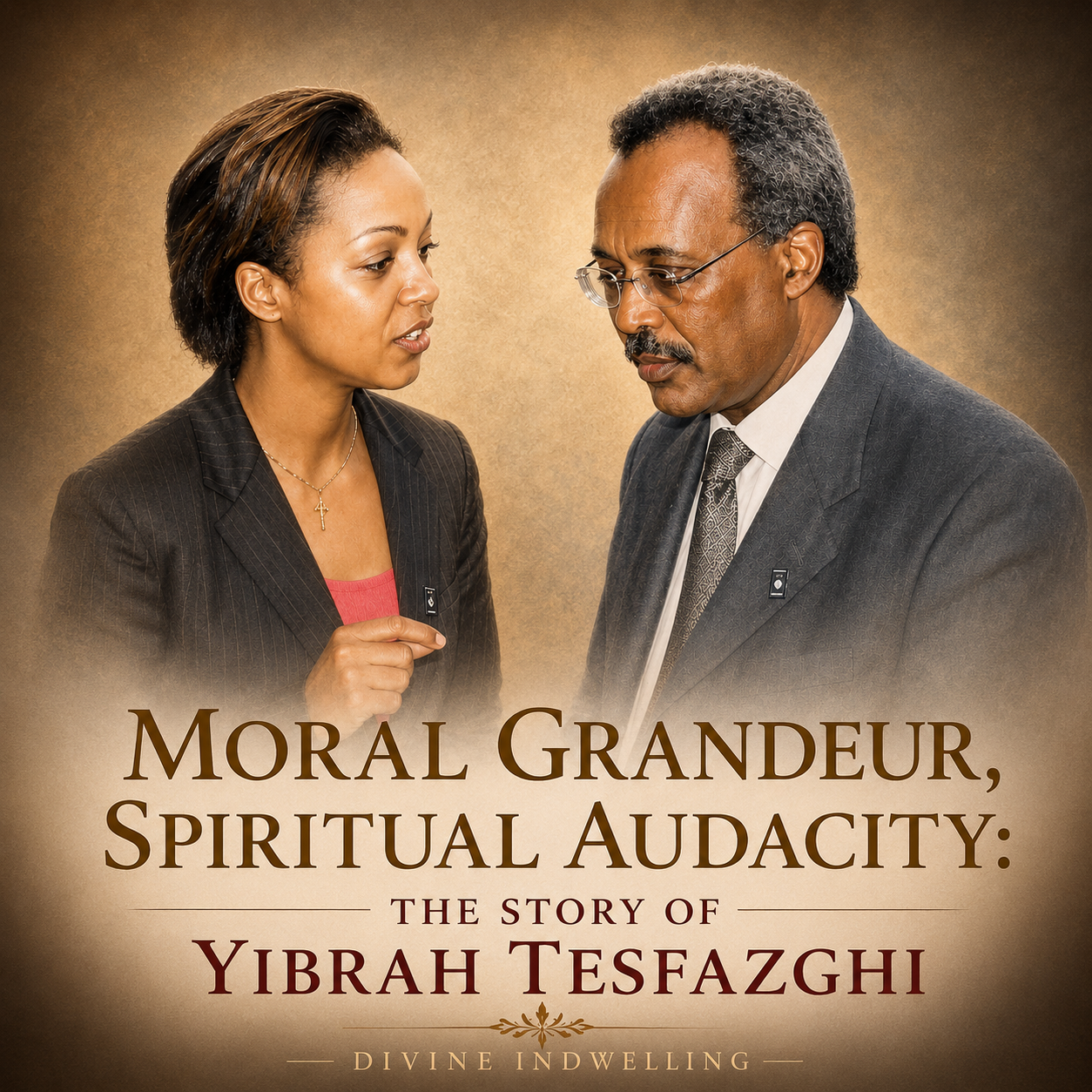
Moral Grandeur, Spiritual Audacity: the story of Yibrah Tesfazghi
On Sunday I wrote about my father, the man who shaped me most as a human being. Today I want to write about another man who shaped me just as profoundly, in a different register and across a different terrain.
Yibrah Tesfazghi is my corporate father.
He was my boss, my mentor, and the man who formed me as a professional leader during the years that matter most, the years at the very beginning, when everything you witness becomes part of how you understand what leadership can be. He is one of the men who has shaped me most.
He has just published his memoir, and his story deserves to be known by far more people than currently know it. He is one of the greatest corporate leaders Africa has ever produced, and the very mechanisms he describes in his book, institutional racism, deliberate erasure, the systematic dismantling of Black excellence by the structures meant to celebrate it, are the same mechanisms that have kept his name from becoming the household reference it deserves to be.
Moral Grandeur and Spiritual Audacity
For me, Yibrah has always represented a living demonstration of two qualities among the most rare in corporate life: moral grandeur and spiritual audacity.
“The hour calls for moral grandeur and spiritual audacity.”
These words were given their sharpest definition by Rabbi Abraham Joshua Heschel, one of my own spiritual heroes, in a telegram he sent to President Kennedy in 1963. Religious leaders had been invited to the White House in hopes of discouraging Martin Luther King Jr. from going ahead with the March on Washington, and Heschel used the invitation to make a demand instead, telling the President that churches and synagogues had failed and needed to repent, that the country needed to declare a state of moral emergency.
Moral grandeur is the size of what a person allows to count as their own responsibility, the willingness to widen that circle past the edge of personal convenience until it includes people whose suffering you did not cause and whose gratitude you will never receive.
Spiritual audacity is the cost a person is willing to pay to act on that responsibility, especially inside the institution that holds power over them, in the room where speaking is expensive and silence would be free.
Heschel aimed his audacity at the religious institutions of his time. In our own era, the institution that most people give their years to, build their identity around, and measure their worth against is the corporation they work for. Corporations have become our churches, whether we name them that or not, and anyone who stands inside one and tells it the truth about itself is doing something that belongs in the same lineage as what Heschel was describing.
Yibrah Tesfazghi did exactly that, for thirty-eight years, inside one of the largest corporations the world has ever known.
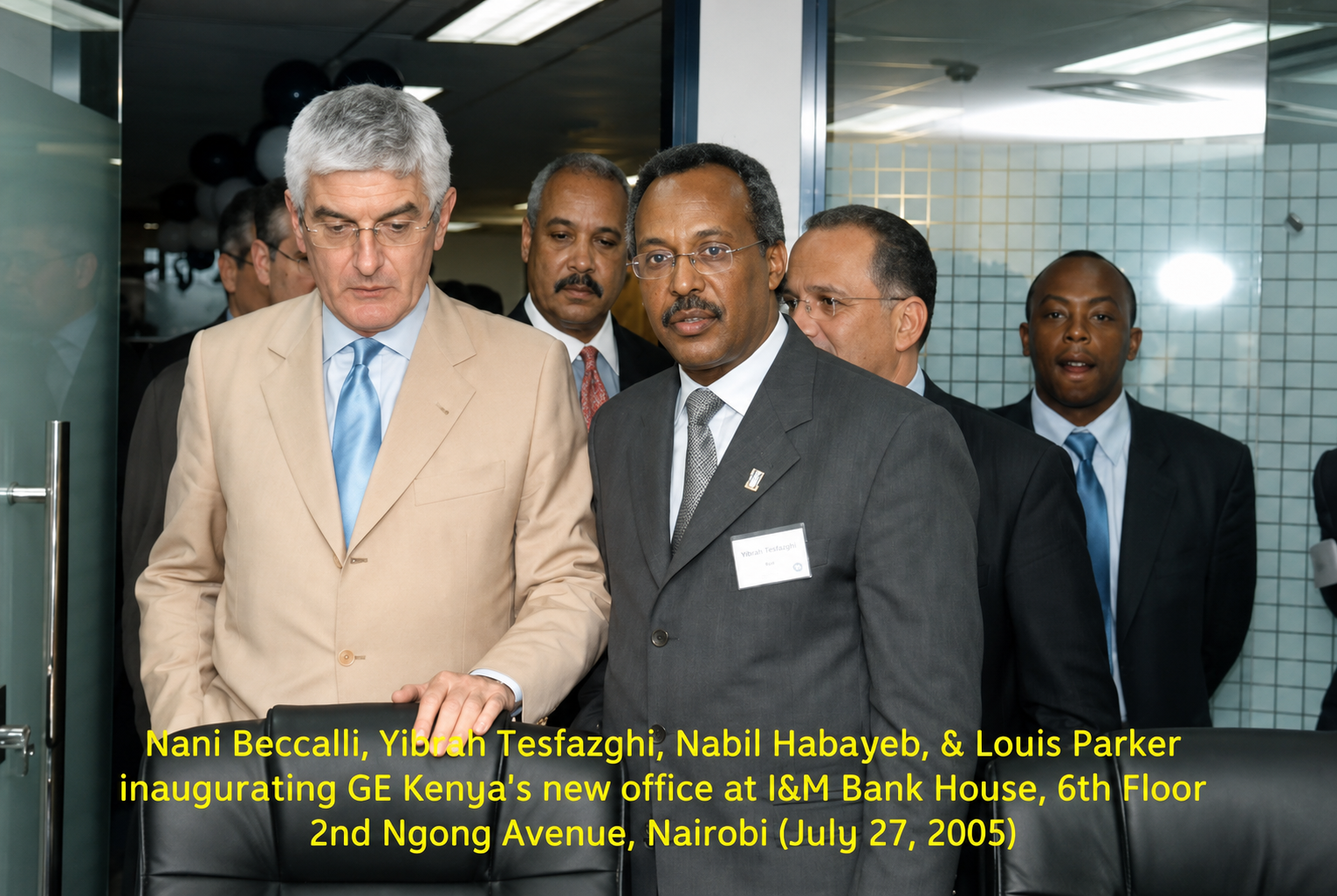
NANI BECALLI - President & CEO GE INTERNATIONAL, LOUIS PARKER - Corporate Vice President GE and GE Capital, NABIL HABAYEB - President & CEO GE Middle-East & Africa, YIBRAH TESFAZGHI - President & CEO GE AFRICAAn African man inside the largest corporation on earth
In 2003, GE was the most valuable company in the world by market capitalization, worth more than Exxon, more than Microsoft. That year, Yibrah was appointed as GE's President and CEO for the Africa Region. He was the first indigenous African ever to hold a senior regional leadership role within GE International.
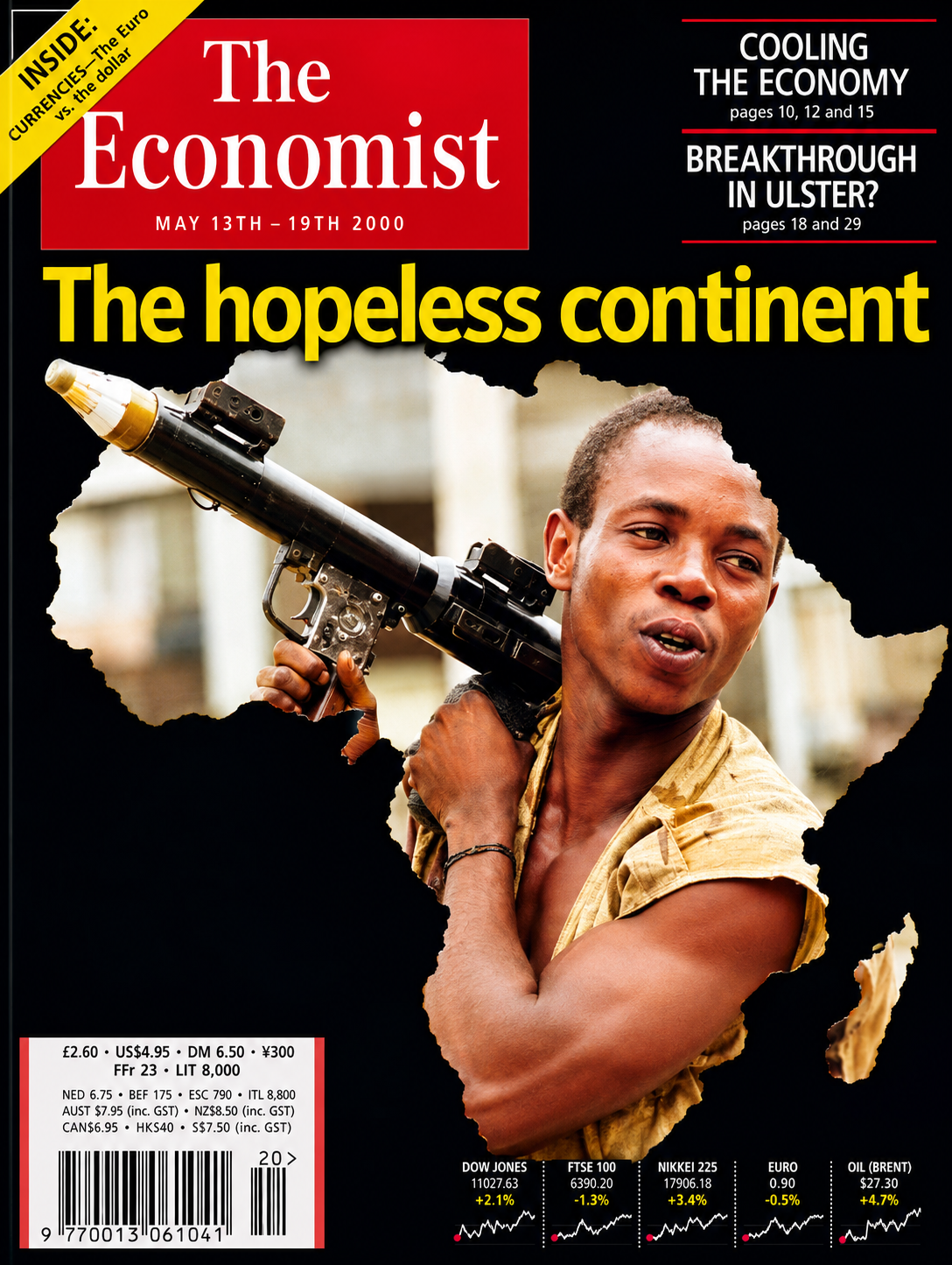
The business he inherited had been standing still for over a century, with almost no footprint on the continent beyond a limited oil and gas operation in Nigeria and a small office in Cairo. The prevailing Western narrative about Africa at the time was one of hopelessness: The Economist had run the headline "Africa, the Hopeless Continent," Newsweek had printed "Hell on Earth," and Time had editorialized "Africa's Woes: Coups, Conflicts, and Corruption." Inside GE itself, the Chairman had once told a leadership gathering that Africa's growth potential "won't happen in my lifetime."
What Yibrah did over the next five years was unprecedented in the company's history and in the history of African corporate leadership.
He built GE Africa's first dedicated growth strategy from the ground up, commissioning independent research that dismantled the false Western narrative about the continent piece by piece, country by country, fact by fact. He assembled a small team of indigenous African leaders, the GE Africa Dream Team, hand-selected against active internal resistance, chosen for their merit, their passion for Africa, and their unimpeachable integrity.
I had the privilege of being the first person he appointed to that team, hired against the explicit recommendations of HR and senior leadership who cited my lack of experience and pushed for more seasoned candidates from the Middle East instead. His account of that decision speaks to everything that made him the leader he was:
“Though young and relatively inexperienced, Swaady’s passion for Africa and GE was unmistakable. Her drive, quick learning, and ability to organize impactful meetings across African markets impressed me. I saw in her the promise of future leadership… passion, potential, and cultural alignment could matter more than experience alone.”
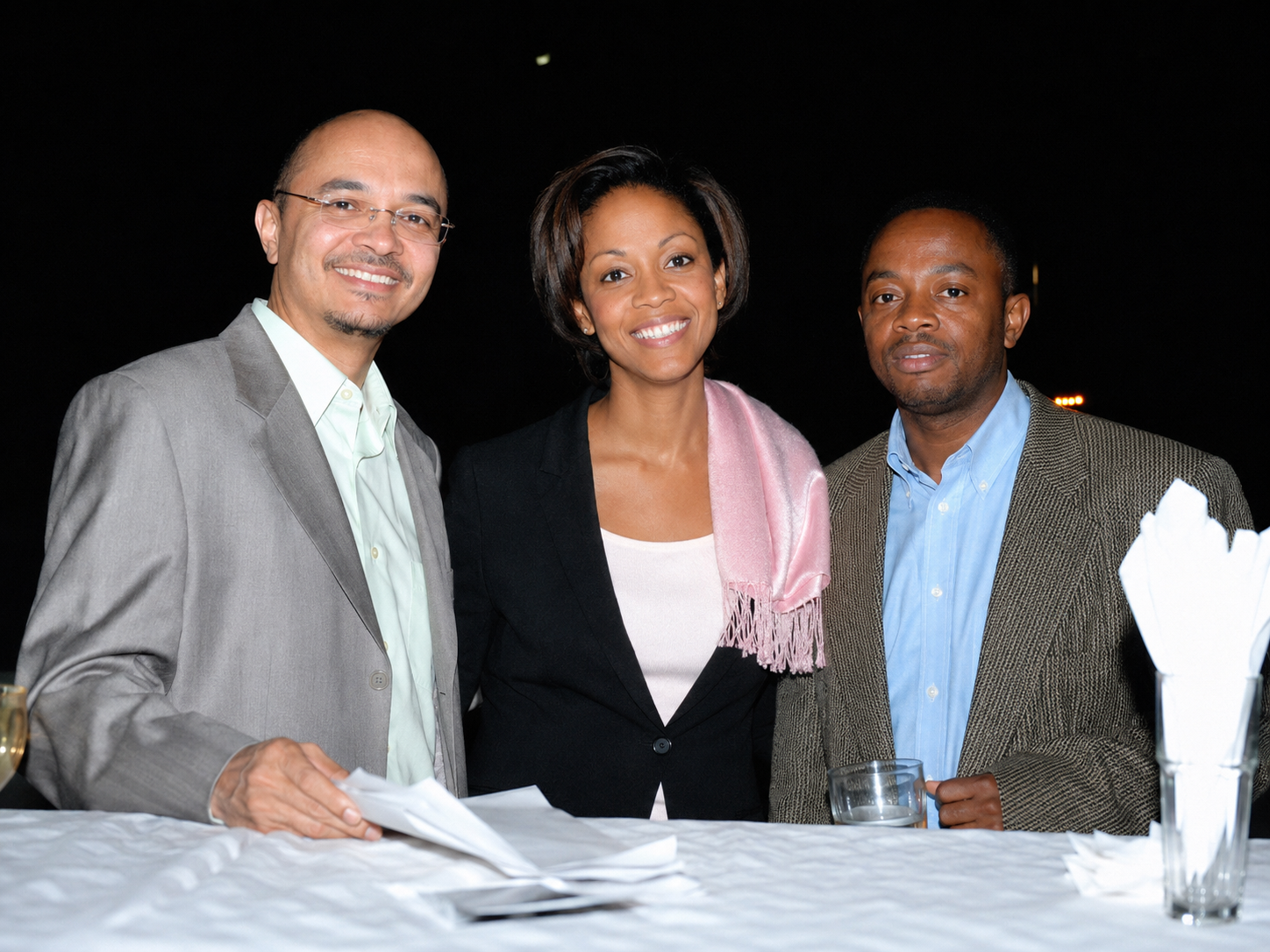
SOME OF THE MEMBERS OF THE GE AFRICA TEAM: ROMEL DIAZ, SAM MAGERA, AND ME.Between 2003 and 2007, the results were transformative. GE Africa became the fastest-growing region in the entire company.
40%+
Annual growth
5 years running
$4.5B
Revenue by 2007
from $150M
2 → 20
Country offices
expanded
2,000
Employees,
almost all African
These were achievements with no precedent in GE's 125-year history, delivered on a continent the company had spent a century overlooking, by a team the company's institutional culture had spent its entire existence excluding.
In 2007, GE's Chairman flew him to New York to present him personally with the company's Heroes of Growth Award, the first time in the company's history that Africa had ever been the center of that recognition.
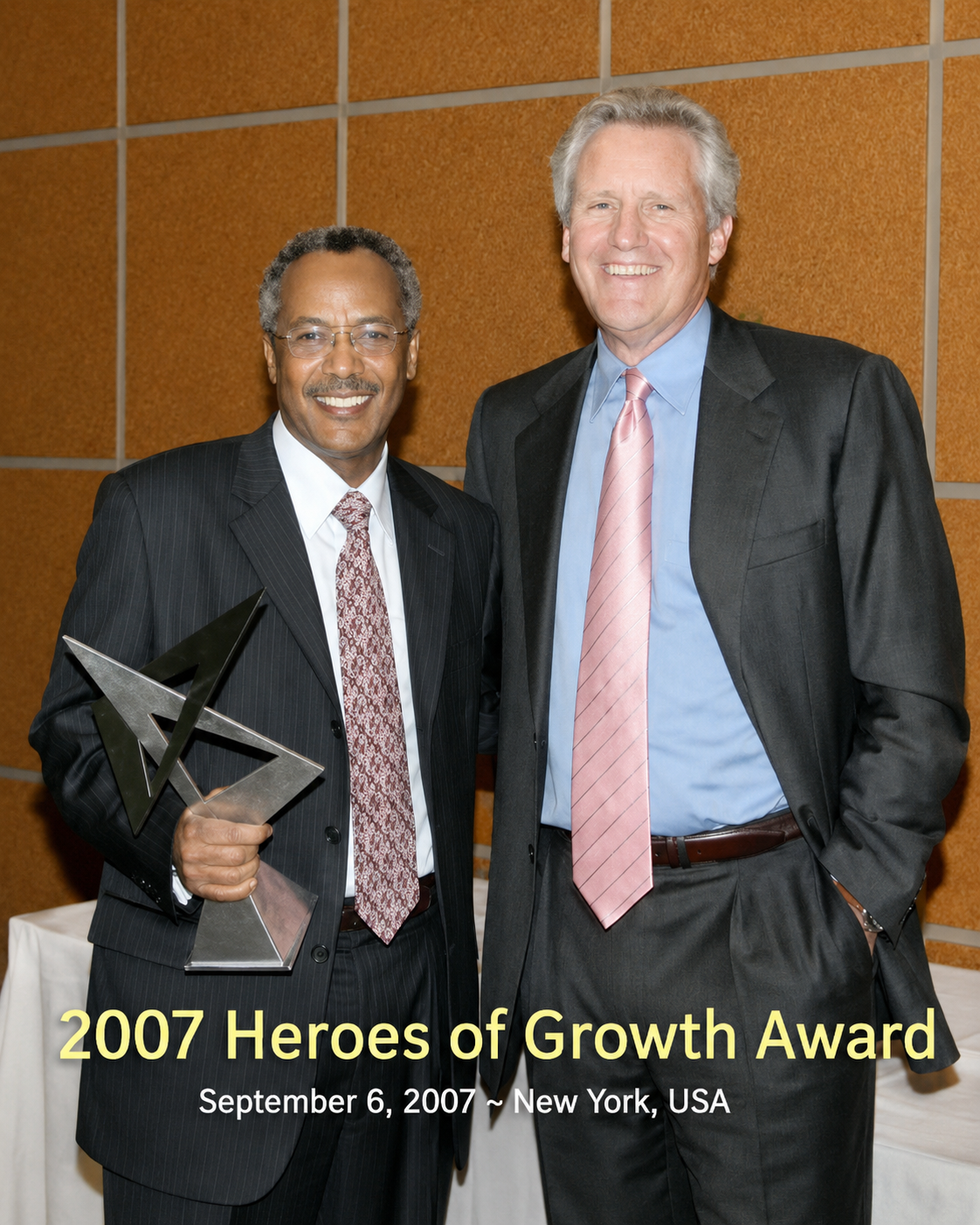
YIBRAH with JEFF IMMELT, CEO of GEHis Moral Grandeur
The full measure of his moral grandeur was visible long before that award, in decisions that had no audience and no guaranteed reward.
When he discovered that many of GE's existing sales agents across Africa were corrupt, inactive, or simultaneously representing competitors, he terminated most of those agreements within months, accepting slower and harder growth at real commercial cost because a compromised arrangement had no place inside what he was building.
When he saw that GE's approach to the continent rested on false perception rather than documented fact, he commissioned his own research and built an evidence base that reframed an entire continent inside a company that had never looked at it seriously.
He spent four consecutive years campaigning for an African GE research center, arguing that a company cannot call itself global while systematically excluding an entire continent from its knowledge infrastructure, pressing that case year after year even as it was stonewalled without a real answer.
He extended his sense of responsibility outward beyond the company entirely, launching a twenty-million-dollar humanitarian healthcare program across Africa, donating medical equipment and infrastructure to rural hospitals with no commercial return attached. He became the executive sponsor of GE Africa's first Women's Network and its first African employee resource group, both built from nothing, both representing constituencies the company had never organized around before.
A decade after his resignation, with nothing left to gain professionally, he filed a sixty-page formal complaint to GE's Chairman and General Counsel, naming thirty-eight years of service and laying out, in precise and documented detail, what institutionalized racism, retaliation, and deliberate erasure had looked like from the inside.
He closed his memoir with a quieter but equally significant act: he built an elementary school in the Eritrean village he had been sent away from at five years old, fulfilling a promise made to his father, so that no child there would ever have to leave home the way he did in order to learn to read.
His Spiritual Audacity
His spiritual audacity showed itself throughout his career in the willingness to say the true thing at the moment it would cost him most.
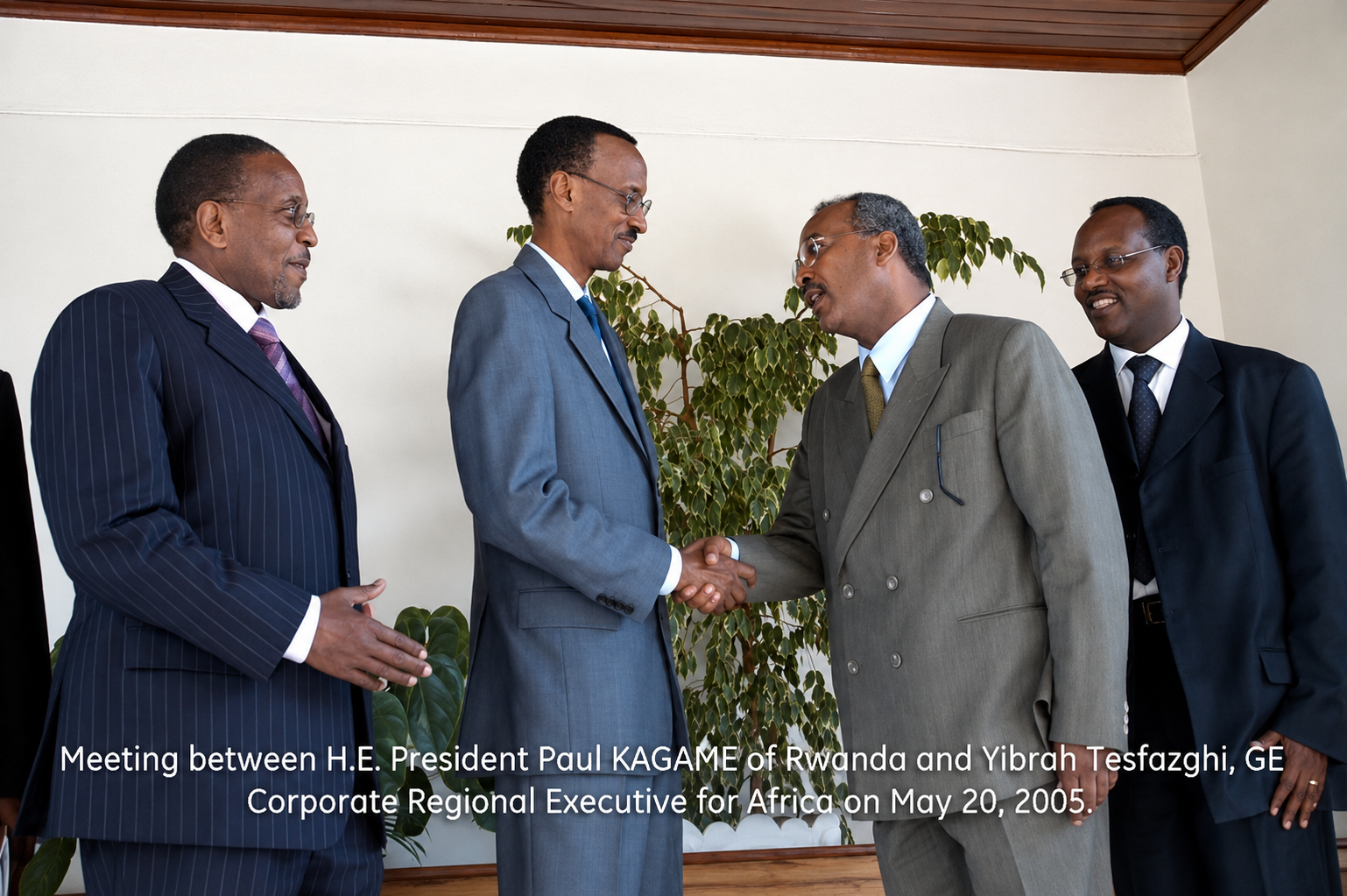
Early in his GE career, after the Gulf War forced his evacuation from Iraq, the company demanded he personally repay a relocation allowance that no other evacuated colleague was asked to return. He refused. In an elite leadership course, he challenged GE's Chairman directly to his face on Africa's exclusion from the company's growth vision, asking plainly what about Africa and holding the question in the room until it was taken seriously. In the interview for the Africa CEO role, before he had accepted the position, he named the retaliation, nepotism, and racial bias he had witnessed inside GE's Middle East operations, risking the offer itself to say what was true.
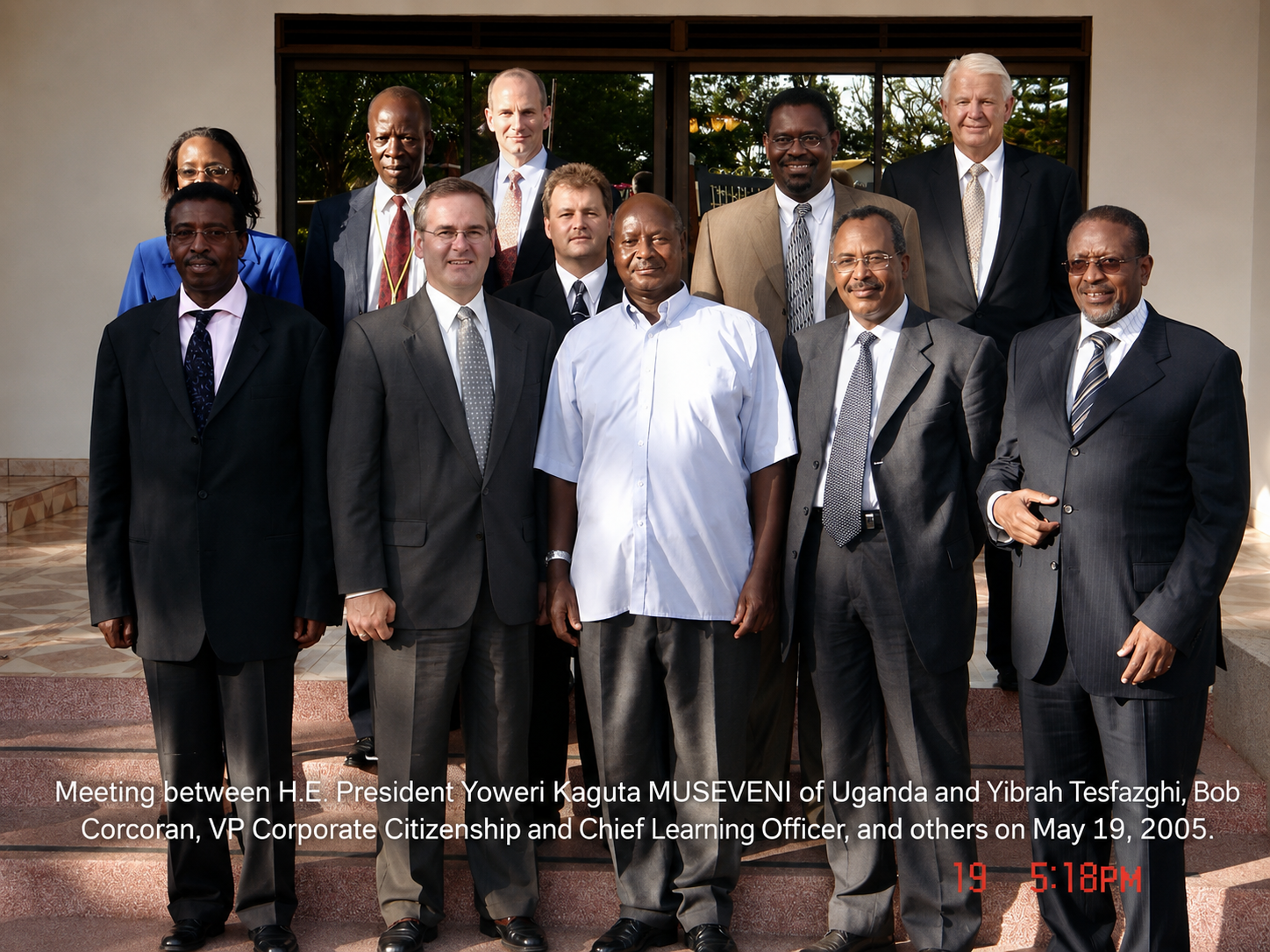
He displayed the same audacity once he held the role, in daily decisions made without witnesses. When hostile leadership manufactured an emergency staff call to pull him away from a scheduled meeting with President Paul Kagame of Rwanda, he kept the meeting with Kagame. When his own regional superior stopped responding to his concerns about roles he had designed being reassigned to candidates outside his criteria, he continued raising those concerns through the proper channels regardless.
When colleagues reduced his team's historic achievements to racial jokes about how quickly he had blackened and darkened the company, and when a rumor campaign falsely attributed the dismantling of his team to a request from African leaders themselves, he documented everything, named everyone, and eventually put all of it on the public record in a memoir bearing his name.
“This memoir is an act of protest, rooted in the pursuit of justice and the conviction that change becomes possible the moment people find the courage to confront the truth.”
A Story that belongs to Africa
His story should already be widely known. The institutional erasure he describes did not begin and end with the dismantling of his team. It extended to the historical record, to the annual reports that folded his results into another region's numbers, to the leadership meetings that credited his division's growth to the structure rather than to the man, to the decades of silence that followed his departure. His memoir is an act of recovery as much as protest, a restoration of a record that was deliberately obscured.
“The years I spent working with Yibrah remain some of the most cherished of my life and career. He was an extraordinary leader, and I owe so much of my growth as a business leader to Yibrah.”
Yibrah Tesfazghi represents a model of corporate leadership that the African continent urgently needs its next generation of leaders to encounter. In an era when success in business is increasingly conflated with visibility, personal branding, and the performance of ambition, his life stands as evidence that the most consequential leadership happens in rooms no one is recording, over years no one is counting, toward goals that an institution has already decided are impossible.
He built the fastest-growing division of the world's largest company on a continent that same company had spent a century dismissing, with a team assembled against institutional resistance, guided by a standard of integrity that never bent to the pressure surrounding it.
Heschel's hour was a telegram asking a nation to wake up to its own moral emergency. Yibrah's was thirty-eight years of choosing, in every room he entered, to be the size that the moment required, regardless of what it cost him.
His memoir, Glass Ceilings & Hidden Walls: A Tale of an African Executive & His African Dream Team, in Corporate America, is the record of what that refusal built, and what it cost. His name belongs among the great corporate leaders this continent has given the world.
NOW AVAILABLE
Glass Ceilings & Hidden Walls
A Tale of an African Executive & His African Dream Team
by Yibrah Tesfazghi